Walk onto any major building and construction website, right into a skyscraper lobby during a drill, or into a factory's muster point, and you will see hats, vests, and tabards in a rainbow of colours. When smoke impends and alarm systems are seeming, those colours do more than embellish attires. They are the shorthand that tells numerous people who supervises. The chief fire warden's hat colour is part of that aesthetic language, yet the reality is extra nuanced than many anticipate. There is a strong pattern across Australia and New Zealand, a few stubborn variations, and a handful of myths that refuse to die.
This write-up distils the criteria, the real-world technique, and the training paths that underpin those colours. It draws on years of running warden programs in offices, health centers, logistics hubs, and tier‑one construction tasks, as well as the current proficiency systems for emergency control organisations.
What most buildings comply with, and why white maintains showing up
Ask 10 facility managers what colour helmet a chief warden uses, and 7 or eight will certainly state white. They will typically be right. In Australia, the majority of offices adhere to the colour conventions connected with AS 3745 - Planning for emergencies in facilities, and its friend manual HB 174. AS 3745 does not mandate a single nationwide colour in legislation, but it has established method for years via representations, instances, and placement with emergency situation control organisation roles.
The common convention resembles this: chief warden in white, deputy chief warden in white with a distinct mark or label, interactions officer in red, flooring or area warden in yellow. Some sites include eco-friendly for first aid or medical reaction, blue for wardens sustaining individuals with special needs, or orange for basic emergency situation employees. Several organisations favor hats when outdoors and hard‑hats are currently called for, and vests or tabards inside where safety helmets would be unwise. The colour on the headgear matches the colour on the vest. That consistency is no mishap. Under pressure, the human mind seeks strong, basic patterns. A white hard hat with "Chief Warden" front and back is hard to miss out on in a smoke‑filled loading dock or a jampacked stairwell.
I have viewed evacuations stall until the white hat showed up at the assembly area. One glimpse, an elevated hand, the crowd presses into order. Colour is authority at a distance.
Variations that are reputable, and just how they happen
Even within the AS 3745 ecological community, facilities have leeway to tailor. Where does that flexibility originated from? The basic calls for a defined Emergency Control Organisation (ECO) with clear functions, recognition, and procedures. It does not regulate a specific colour scheme in regulation. Lots of organisations adopt the AS 3745 colour examples because they work and since service providers, visitors, and very first responders expect them. Others adapt to match special dangers or to deconflict with existing PPE colour schemes.
Here are patterns I have seen that job without developing complication:
- Where all workers should wear white construction hats as general PPE, the chief warden maintains white yet adds high-contrast stickers, reflective "CHIEF WARDEN" labeling front and back, and a different white vest with big text. Floor wardens shift to yellow safety helmets with yellow vests, keeping the top role aesthetically distinct. In healthcare facility settings, first aid and professional groups frequently already claim green. To avoid overlap, some health centers maintain medical environment-friendly yet keep yellow for wardens and white for the chief and deputy. Patient transportation and code groups make use of separate armbands or back patches to prevent trouble during a fire code. On construction, professions and managers commonly have colour-coding of construction hats baked into website guidelines. As opposed to battle that, projects release snap-on headgear covers or over-helmets in warden colours. The chief warden cover is white, printed with black "CHIEF WARDEN" message a minimum of 50 mm high. This maintains site power structure and adds emergency situation clarity.
Where organisations drift substantially, they pay for it later on. I when examined a site that made a decision red need to suggest chief warden because it looked "fire related." The result was foreseeable. Contractors presumed red implied average fire wardens, the interactions police officer also put on red, and firemens getting here on scene dealt with three various "leaders." They reverted to white within a week of the very first whole‑of‑site drill.
Myths that keep tripping individuals up
Myth one: the regulation claims the chief warden should wear a white helmet. There is no regulation that names a details headgear colour. Work health and wellness regulations call for reliable emergency situation arrangements, and AS 3745 sets an acknowledged standard. White for chief warden is a strong convention, yet you need to confirm versus your site's recorded emergency situation strategy and the register of ECO roles.
Myth two: colour is enough. It is not. Exposure and recognition depend upon comparison, dimension of lettering, positioning, and illumination. In a stairwell with emergency situation illumination, a little sticker label loses to a huge reflective back spot. If you have ever had to handle a discharge in a blackout, you understand reflective lettering is worth the little added spend.
Myth 3: when everyone knows, training is done. Individuals change functions, contractors reoccur, and extended periods in between occasions wear down memory. You will certainly require persisting drills and refresher courses. The PUA training devices exist because experience chief warden shows identification and function clarity decay in time without practice.
How firefighter colours vary from warden colours
Another frequent complication: firemans and wardens do not share the exact same colour schemes. Urban fire brigades use their very own safety helmet colours to distinguish crew functions. Those systems vary by territory and have no bearing on what your ECO uses. The ECO's work is to leave, account for people, handle information, and communicate with emergency situation solutions up until the incident controller from the fire service takes command. When crews get here, they anticipate to find a chief warden plainly identified and ready to brief them. A white helmet with bold "Chief Warden" message becomes part of being recognisable. Matching the fire solution colour system is not.
Where training fits: PUA units and what they really teach
Colour choices are one item of a wider ability. The Australian PUA training systems mount the expertises. PUAER005 Operate as part of an emergency situation control organisation, often shortened puafer005, is the standard for fire warden training. It covers how to respond to alarms, determine and evaluate an emergency, follow the facility's emergency situation strategy, interact, and safely relocate individuals to setting up areas. The puafer005 course offers wardens the muscular tissue memory to do their function without presuming. For numerous workplaces, it is the minimum fire warden training requirement.
For leaders, PUAER006 Lead an emergency situation control organisation, commonly created puafer006, extends into command, decision-making under stress, and liaison with emergency situation services. The puafer006 course is where chief wardens, replacement chiefs, and interactions police officers discover to collaborate multiple floorings or areas simultaneously, to interpret panel indications, and to make the phone call to intensify or isolate. If you want a person to use the white hat, they must pass puafer006 and demonstrate those proficiencies in drills. A crisp "Chief Warden" label does not compensate for reluctant leadership.
In method, I recommend a tempo. New wardens finish the fire warden course lined up to puafer005, then shadow experienced wardens during drills. Possible principals finish the chief fire warden course lined up to puafer006, after that function as deputy in a minimum of one full discharge before they bring the title. That lived rehearsal matters greater than any certification on the wall.
Selecting hats, vests, and recognition that endure the genuine world
Procurement frequently defaults to the most affordable catalogue alternative. Invest a bit extra. The job needs equipment that works in bad light, warm, and rain, and that stays noticeable in thick crowds.
I search for white construction hats for primary wardens with high-gloss coverings and wraparound reflective tape. The front and back require large "CHIEF WARDEN" labels. The sides can include the facility name or logo design, but prevent mess. Inside your home, a white vest in high-contrast textile with reflective "CHIEF WARDEN" across the back and a smaller front breast tag gets the job done. For the communication police officer, red vest and helmet or helmet cover with "COMMUNICATIONS" or "COMMS." For flooring wardens, yellow stays the most readable across different lighting problems, and it contrasts well with the white of the chief.
Font option silently matters. Use plain block text. I have measured clarity at assembly factors, and high, vibrant sans serif letters defeat decorative typefaces every time. Stay clear of glossy vinyl on glossy plastic if reflections will certainly rinse the text under floodlights. Matt reflective patches review better on video camera for later review.
For multi‑language sites, include iconography. An easy radio symbol on the interactions police officer vest aids non‑English audio speakers in the moment. For availability, pair colours with words for those with colour vision shortage. The label "Chief Warden" is not optional.
What to do when several organisations share a facility
Shared tenancy structures and campuses introduce complexity. Each renter may run its very own emergency warden training and select its own branding. If they all choose different palette, the stairwells end up being a carnival. You require a building-wide ECO framework.
In multi-tenant towers, the building supervisor generally maintains the base building emergency situation strategy and assembles an ECO board with representation from each occupant. The building chief warden should be identifiable to all tenants. The majority of towers insist on the basic palette: white for the building chief warden and deputy, red for communications, yellow for flooring wardens. Occupants can use their own branding on vests but ought to keep the colours aligned. The building plan need to also record just how lessee principal wardens hand off to the structure principal, who speaks to reacting firemans, and how responsibility for headcount is accumulated at the setting up area.
I have actually seen this harmonisation conserve minutes. A tower in Parramatta as soon as moved 3,000 people to two assembly areas in nine minutes throughout a smoke occasion from a cellar mechanical failing. They used regular colours across thirteen tenants. The firemans showed up, fulfilled a white‑helmeted chief at the fire control area, received a tidy quick in under 60 seconds, and isolated the event. No one asked that remained in charge.
Addressing side situations: outside sites, evening job, and extreme noise
Outdoor plants, rail passages, and remote facilities bring obstacles that office-based plans gloss over. Wind will certainly rip a loose safety helmet cover off a head. Radios will fight with plant noise. Darkness and dirt will transform colours right into gray.
For night work, reflective trims come to be a requirement, not a nice-to-have. I define 50 mm reflective tape on vests, plus reflective lettering for role titles. White helmets with reflective banding outshine any various other mix at night. For extreme sound, colour coding need to be paired with hand signals. Train them, record them in the emergency situation plan, and rehearse with hearing protection on. In dust or haze, clean lines and bigger lettering beat complex badge designs.
On hefty commercial sites, several workers already use details headgear colours linked to trade or authority. As opposed to topple site policies, problem white "chief warden" over-helmets or high-visibility helmet wraps with safe and secure holds. The leading function continues to be noticeable while valuing the site's safety culture.
Drills that test whether your colours actually work
A plain discharge will certainly not tell you if your colours are effective. 2 drills per year, with one unannounced, is common. A minimum of one ought to worry identification.

I like to run a situation where a deputy principal takes over mid-evacuation. People must be able to situate that individual aesthetically without radio babble. Another variation replaces the normal interactions officer with a new hire wearing the correct red gear. Can others locate them promptly when instructed to relay a message? If the answer is no, your tags are too small or your palette encounter existing PPE.
Add video review. Many entrance halls and entries have CCTV. With authorization and personal privacy controls, testimonial footage from the drill to see if wardens and particularly the white-hatted chief stand out. If you can not track them dependably on display, neither can a worried visitor.
Training web content that attaches colour to competence
A warden course must key skills for emergency wardens not stop at colour graphes. Good emergency warden training ties the visual identity to function practices. In puafer005 operate as part of an emergency control organisation, students should exercise making themselves noticeable on arrival at the panel, revealing their role, and providing easy, repeatable instructions. They discover to shepherd, not shout. In puafer006 lead an emergency control organisation, candidates rehearse prioritising minimal sources throughout numerous areas, delegating flooring checks to yellow wardens, and maintaining the communications network clear. The chief warden's voice and visibility, reinforced by the white hat, carries the plan.
When I run chief fire warden training, I construct in a communications failure. The principal sheds their radio for two minutes. Can the group still find the chief warden by view and path messages via them? If not, the recognition system, consisting of the chief warden hat and vest, needs improvement.
Common procurement mistakes and just how to prevent them
Organisations usually buy set quickly after an audit. The challenges are predictable.
- Buying common white hats without function tags. Fix this with high-contrast, sturdy tags front and back. Using red for "fire associated" functions indiscriminately. Reserve red for the interactions policeman if you follow the typical pattern, and keep the chief warden in white. Choosing vests with little text or low-contrast colours. Examination readability from 10, 20, and 30 metres in real illumination conditions. Assuming a single-size approach. Headwear must fit over beanies or hair, especially in wintertime exterior settings, and vests have to fit firmly over bulky PPE. Neglecting upkeep. Unclean reflective surface areas shed their objective. Replace harmed safety helmets and faded vests as component of quarterly checks.
None of these solutions are costly. The expense of complication in an emergency situation is.
Alignment with fire warden requirements in the workplace
Compliance teams occasionally ask for a crisp list of fire warden requirements in the workplace. The essentials are simple: a present emergency situation strategy, a defined ECO with documented roles, ideal identification and devices, training versus appropriate units such as puafer005 for wardens and puafer006 for leaders, routine drills, and records of visits and expertises. The recognition item is where the chief warden hat colour sits. Make certain your emergency warden training and documents explicitly connect the colours to the roles named in your plan.
For new managers, it can aid to assume in layers. The strategy names duties. The training builds skills. The tools, including hats and vests, makes those roles noticeable under anxiety. Audits connect all 3 with evidence: course certifications, pierce records, devices registers, and pictures of identification in use.
When and how to change your colour scheme
There are good reasons to change your system, and there misbehave ones. A rebrand or a choice for a face-lift is not an excellent reason. A clash with compulsory PPE or a pattern of complication in drills is.
Before you alter, examination. Run a small pilot on one floor or one site. Short everybody. Use signs near lifts and exits for a month: "Chief Warden wears white. Flooring Warden puts on yellow." Then drill. If individuals still hesitate, your style is not doing enough work. Repair the design prior to you expand the change.

If you run several sites, standardise across them. Service providers and staff step between locations, and uniformity reduces the learning contour throughout the first two minutes of an emergency, which is when most misunderstandings bloom.
Answering the easy inquiry: what colour safety helmet does a chief warden wear?
In most Australian workplaces that comply with AS 3745 standards, the chief warden uses a white headgear or white headwear and a matching white vest or tabard, each clearly significant "Chief Warden." The deputy chief normally shares white, identified by "Replacement" or by a second marking. Other ECO roles follow with yellow for wardens and red for interactions. Where a website's PPE or existing colour regulations conflict, maintain the chief warden in the most visible, unique colour readily available, and make the tag do heavy lifting. If you need to deviate from white, document the choice in your emergency situation plan, short occupants, and test it through drills up until it is 2nd nature.
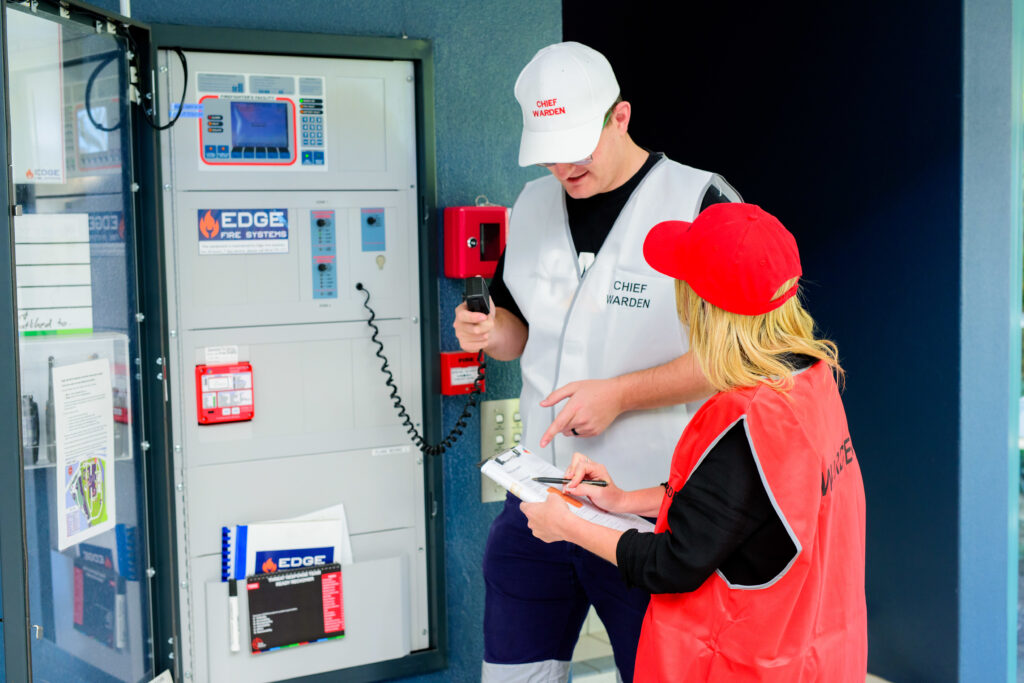
The colour itself does not save anybody. It purchases recognition. Acknowledgment gets secs. Trained people using those seconds well are what make the difference.
Final, functional assistance for center leaders
Colour is a tool. Utilize it deliberately and attach it to training, not as decoration yet as a functional control. Testimonial your existing plan versus your emergency plan. Confirm that your principals and replacements have completed the appropriate training modules, whether via a warden course concentrated on puafer005 or a chief warden course aligned to puafer006. Stroll your site at lunch break and at night to check clarity. If you can not find your white hat and read "Chief Warden" from the back of the lobby, neither can the people you are attempting to move.
At the next drill, stand at the setting up area and look back at the building. Discover the person in the white hat. If they are very easy to discover, you get on the appropriate track. Otherwise, adjust. That silent, useful technique beats any type of myth regarding what a colour "must" be. It is what keeps order when it matters.
Take your leadership in workplace safety to the next level with the nationally recognised PUAFER006 Chief Warden Training. Designed for Chief and Deputy Fire Wardens, this face-to-face 3-hour course teaches critical skills: coordinating evacuations, leading a warden team, making decisions under pressure, and liaising with emergency services. Course cost is generally AUD $130 per person for public sessions. Held in multiple locations including Brisbane CBD (Queen Street), North Hobart, Adelaide, and more across Queensland such as Gold Coast, Sunshine Coast, Toowoomba, Cairns, Ipswich, Logan, Chermside, etc.
If you’ve been appointed as a Chief or Deputy Fire Warden at your workplace, the PUAFER006 – Chief Warden Training is designed to give you the confidence and skills to take charge when it matters most. This nationally accredited course goes beyond the basics of emergency response, teaching you how to coordinate evacuations, lead and direct your warden team, make quick decisions under pressure, and effectively communicate with emergency services. Delivered face-to-face in just 3 hours, the training is practical, engaging, and focused on real-world workplace scenarios. You’ll walk away knowing exactly what to do when an emergency unfolds—and you’ll receive your certificate the same day you complete the course. With training available across Australia—including Brisbane CBD (Queen Street), North Hobart, Adelaide, Gold Coast, Sunshine Coast, Toowoomba, Cairns, Ipswich, Logan, Chermside and more—it’s easy to find a location near you. At just $130 per person, this course is an affordable way to make sure your workplace is compliant with safety requirements while also giving you peace of mind that you can step up and lead when it counts.